

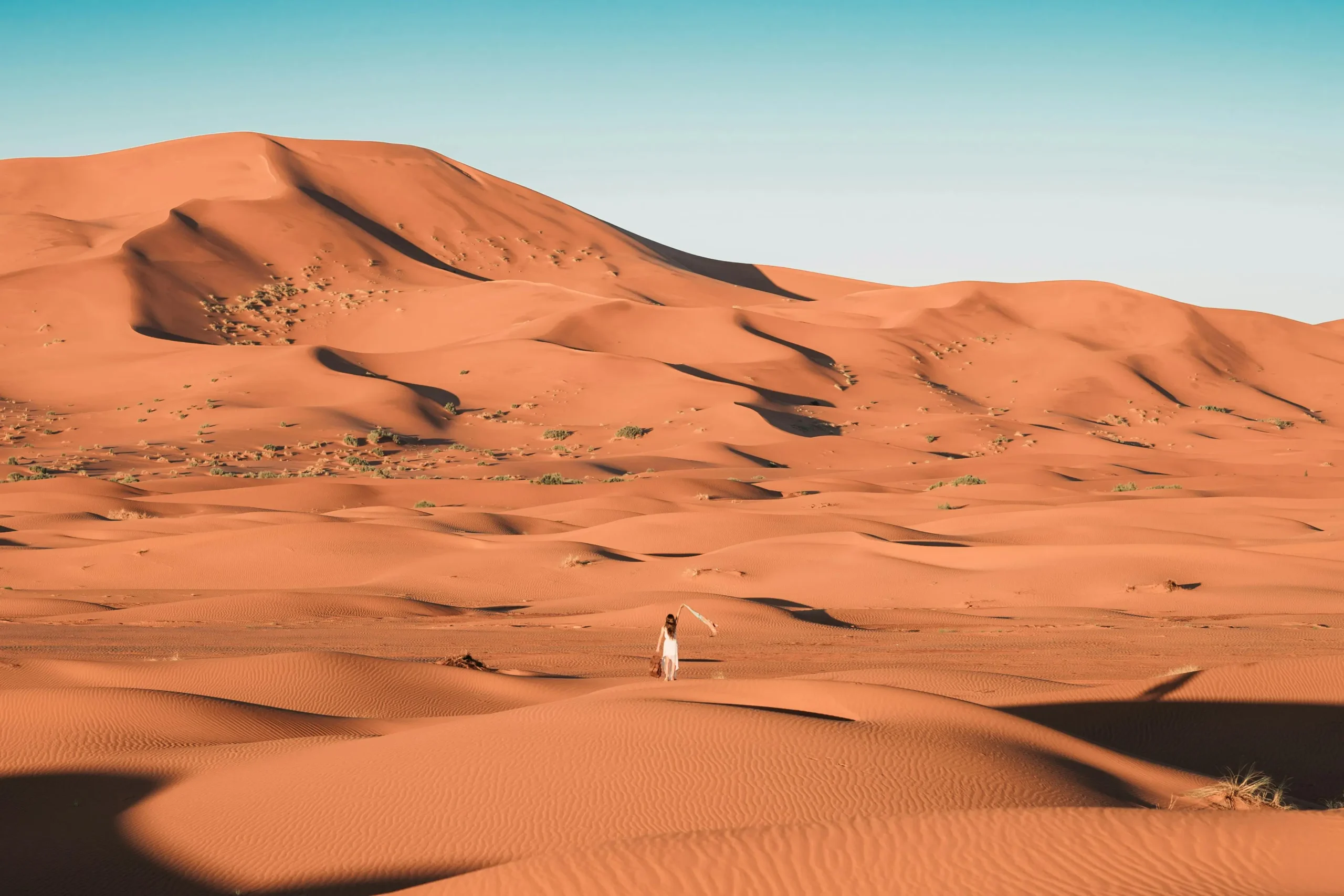
Nobody who has ever crested a Saharan dune at sunset and watched 270,000 square kilometres of Morocco turn the colour of molten copper — absolutely nobody — has come back and said, “Yeah, it was alright.” The Sahara Desert in Morocco is the kind of place that quietly rearranges your internal furniture while you sleep under a ceiling of ten-thousand stars. One night out here and you start questioning why you ever thought city noise was normal. This guide covers everything you need — the best locations, the right season, real costs, and hard-won tips from people who’ve been leading travellers into these sands for over two decades.
Where Is the Sahara Desert in Morocco? A Geography Refresher Worth Having
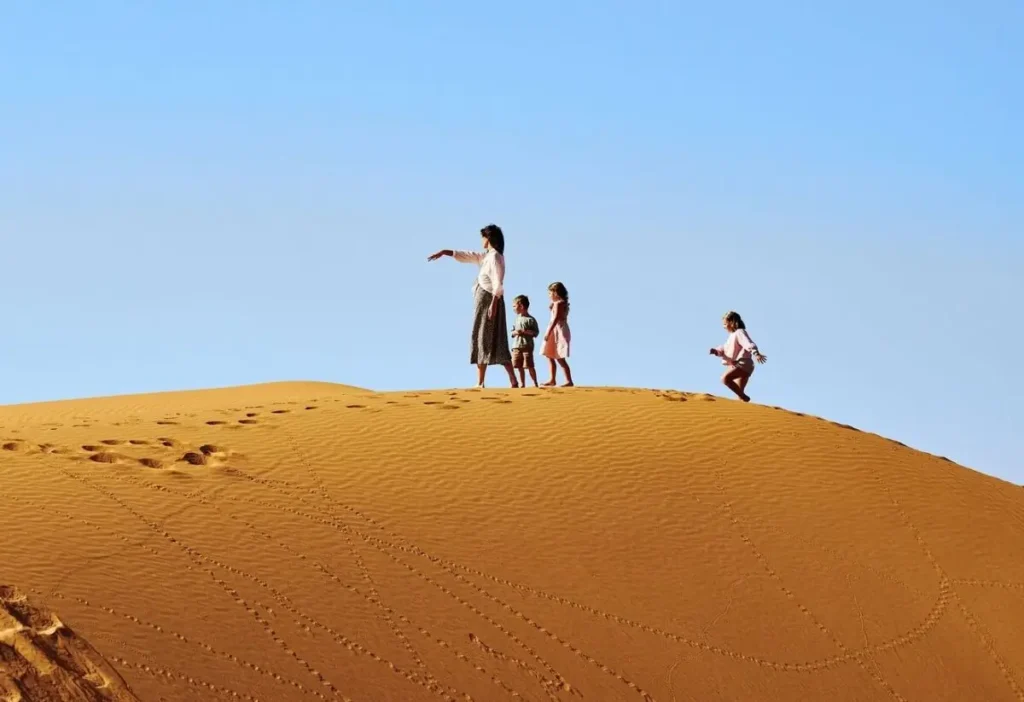
Morocco’s slice of the Sahara sits in the southeastern corner of the country, framed by the High Atlas Mountains to the north and the Algerian border to the east. It’s not one single desert — it’s a mosaic of rocky hamadas, dry riverbeds, palm-studded oases, and the dramatic ergs (seas of sand dunes) that most people daydream about. The two ergs worth knowing:
| Desert Erg | Location | Vibe | Best For |
|---|---|---|---|
| Erg Chebbi (Merzouga) | Near Errachidia Province | Accessible, popular, photogenic | First-timers, families, short trips |
| Erg Chigaga (M’Hamid) | Near Zagora Province | Remote, wild, fewer tourists | Off-grid seekers, longer expeditions |
Erg Chebbi vs. Erg Chigaga: Which Sand Sea Belongs on Your Itinerary?
Erg Chebbi’s dunes near Merzouga climb up to 150 metres — tall enough to make your legs burn on the ascent and your heart soar at the top. It’s well-connected and the logistics are easy. Erg Chigaga, accessed via the ancient caravan town of M’Hamid, sits two hours deeper into true wilderness, where you can go an entire morning without spotting another footprint in the sand. If you only have a weekend, Merzouga wins on convenience. If you have four days and a taste for the untamed, our 4-day Erg Chigaga expedition from M’Hamid will spoil you for any future travel — fair warning.
When Is the Best Time to Visit the Sahara Desert in Morocco?
Let’s be honest about summer: July and August in the Moroccan Sahara can hit 45°C (113°F), and that’s not romantic — that’s dangerous. The sweet spots are:
- October to November — warm days (28–33°C), cool nights, thin crowds
- February to April — the desert blooms after winter rains, wildflowers dot the plateaus, dunes are perfectly sculpted by winter winds
- December to January — cold at night (near 0°C), but atmospheric and peaceful, with exceptional stargazing visibility
“The Sahara in October is everything. The light turns golden an hour before sunset, the heat drops to something you can actually breathe, and the silence is so complete you can hear your own pulse.” — A Sahara Services guest, Erg Chigaga, October 2024
📌 Pro Tip: Book your desert camp at least 6–8 weeks ahead for October travel. It’s Morocco’s busiest desert season and the best camps fill up fast. The 48-hour “I’ll decide later” strategy really doesn’t work here.
How to Get to the Moroccan Sahara from Major Cities
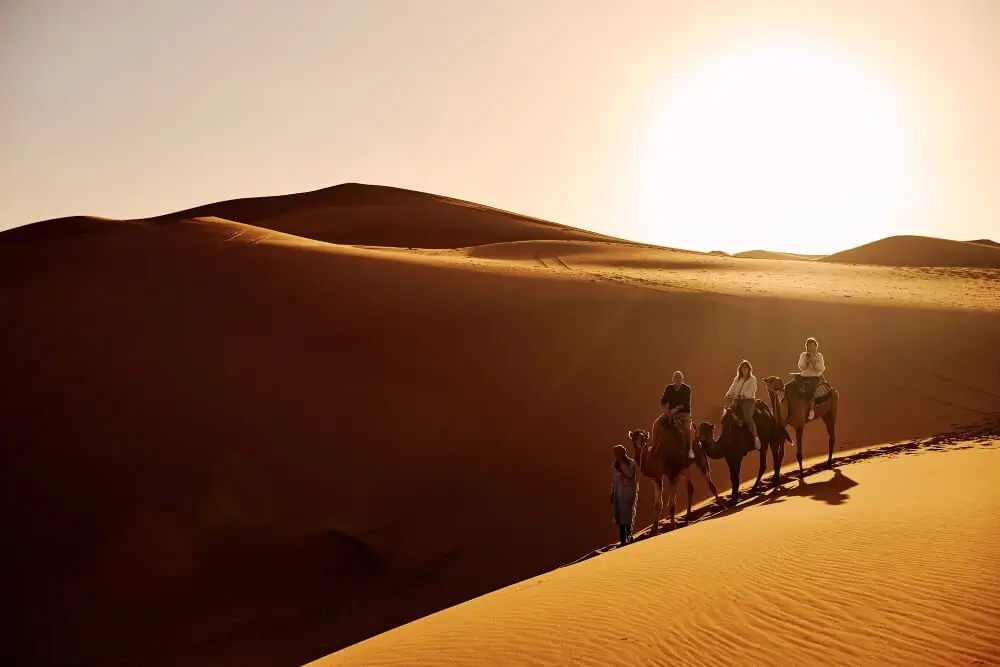
Getting to the desert is half the adventure — Morocco’s roads through the Atlas Mountains are genuinely jaw-dropping. Here’s what the journey looks like:
| Departure City | Destination | Drive Time | Best Option |
|---|---|---|---|
| Marrakech | Merzouga (Erg Chebbi) | ~8–9 hrs | Private 4×4 with stops at Aït Benhaddou + Todra Gorge |
| Marrakech | M’Hamid (Erg Chigaga) | ~6–7 hrs | Private transfer via Ouarzazate |
| Fes | Merzouga | ~6 hrs | Classic Fes–Merzouga desert tour |
| Agadir | M’Hamid | ~5–6 hrs | Scenic coastal-to-desert route |
Flying into Ouarzazate Airport cuts driving time significantly if you’re short on days. But honestly? The overland journey through the Draa Valley and the Dadès Gorges is practically a destination in itself. Don’t rush it. We operate fully guided, air-conditioned private tours from Marrakech to the Sahara that stop at all the iconic sights along the route — no headaches, no navigating unmarked pistes, no getting stuck in sand (unless you want that kind of excitement, in which case — we can arrange it).
Top Things to Do in the Sahara Desert in Morocco
Beyond the obvious (stare at dunes, feel small, reassess life choices), Morocco’s Sahara is genuinely packed with experiences harder to find anywhere else on Earth.
Camel Trekking, Sandboarding & Midnight Stargazing
- Camel trekking at sunrise or sunset — a proper hour-long ride into the dunes changes your relationship with silence
- Sandboarding — it’s snowboarding’s chaotic desert cousin and costs about 50–80 MAD (£4–7) to rent a board. The wipeouts are completely free.
- 4×4 dune bashing — request this with your driver and hold onto something structural
- Stargazing — the Sahara has virtually zero light pollution. In the right spot, the Milky Way looks close enough to touch
- Cooking with Berber nomads — traditional tagine over a wood fire tastes different when the nearest restaurant is four hours away
Luxury Desert Camps vs. Authentic Berber Tents: Know Before You Book
- Budget camps (from €25/night) — basic mattresses, shared toilets, genuinely warm hospitality. Great for solo backpackers.
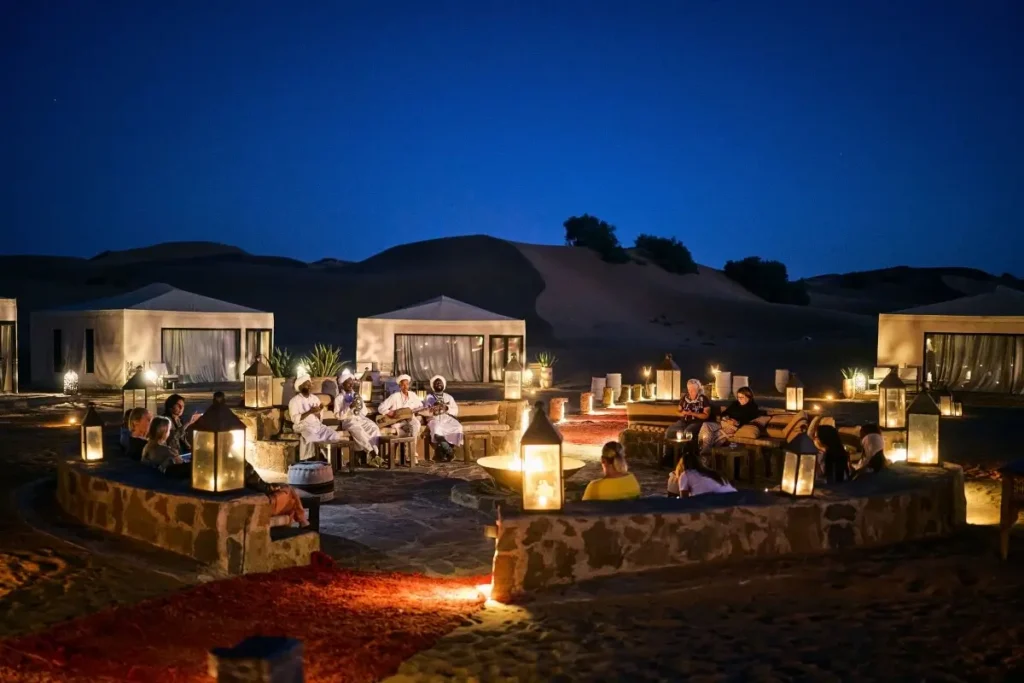
- Mid-range camps (€60–120/night) — private Berber tents, hot shower, half-board meals, live gnawa music. The sweet spot for most travellers.
- Luxury camps (€150–300+/night)
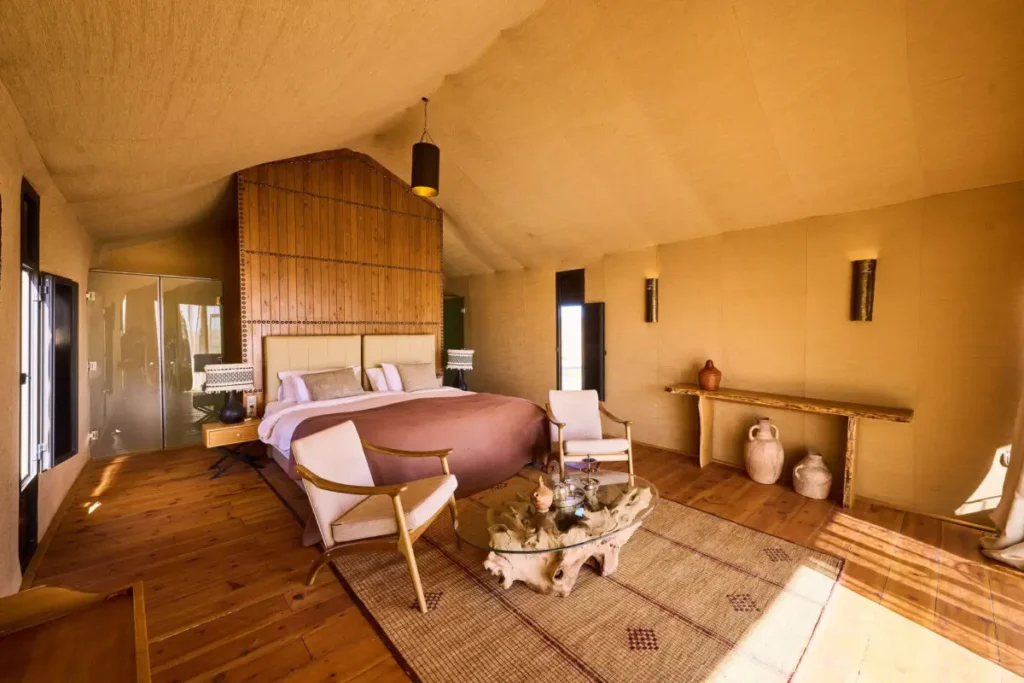
Ensuite bathrooms, real beds, chef-prepared Moroccan cuisine, spa treatments under the stars. Our luxury Morocco desert camps include premium tented suites at both Erg Chigaga and Erg Chebbi with all meals and guided activities included.
🌿 Local Secret: Ask your camp host about a Gnawa music session in the evening. This ancient sub-Saharan tradition — raw, rhythmic, spiritually charged — is one of Morocco’s most underrated cultural treasures and you won’t find it in a Marrakech hotel lobby.
Berber Culture in the Moroccan Sahara: More Than a Photo Opportunity
“The desert doesn’t belong to the sand. It belongs to the people who have always known how to read it.” — Said, Sahara Services guide, M’Hamid
The indigenous Amazigh (Berber) communities of Morocco’s south have lived alongside — not just in — this desert for millennia. A few things a respectful traveller keeps in mind:
- Greet first. “As-salamu alaykum” goes a long way before any transaction or photo request.
- Dress modestly outside of camp, particularly in village areas — shoulders and knees covered.
- Ask before photographing people. Many Berber nomads genuinely prefer not to be photographed. Respect that without drama.
- Buy local. That hand-woven Tuareg scarf from the nomad market keeps a family fed far more directly than a commission-driven souvenir shop.
For deeper cultural connection, our Merzouga Desert guide covers authentic nomad village experiences you won’t find on any mainstream travel site.
What to Pack for the Sahara Desert in Morocco (Don’t Learn This the Hard Way)
Clothing, Gear & Health Essentials
- Lightweight, long-sleeve clothing — loose linen or cotton. The sun here is not negotiating.
- A quality headscarf or tagelmust — your nose will thank you when desert winds kick up at noon
- Warm layer for nights — even in summer, desert nights cool sharply after midnight
- SPF 50+ sunscreen — reapply every two hours. The UV at this latitude is fierce.
- Electrolyte sachets — dehydration sneaks up before thirst does
- A headlamp — camp lighting is atmospheric but dim, and you’ll need it for 2am stargazing walks
- Closed-toe shoes — sandals get into arguments with dune edges
- Power bank — charging points in remote camps are limited
⚠️ Safety Note: Never wander into open desert alone without a guide or GPS, especially at Erg Chigaga. Dunes look identical from most angles and disorientation happens faster than you’d expect. Morocco’s Sahara is safe — for prepared travellers. The UK Foreign Travel Advice for Morocco confirms the southeastern tourist regions are well within normal travel safety parameters.
Frequently Asked Questions About the Sahara Desert in Morocco
How many days do I actually need in the Sahara Desert in Morocco? Two nights is the honest minimum — one night barely scratches the surface. Three to four nights gives you the full rhythm: a sunrise dune walk, a full day to explore, an evening of music around the fire, and a second sunrise that’ll reframe the first. For Erg Chigaga specifically, budget four to five days — the remoteness requires it and rewards it equally.
Is the Sahara Desert in Morocco safe for solo travellers? Yes — and solo travel here is genuinely wonderful. Morocco’s southern desert regions are among the safest in North Africa. Solo women travellers do it regularly and report feeling welcomed and respected, particularly when travelling with a reputable operator. The key is using a trusted, licensed Moroccan guide — not only for safety but because the landscape without local context is like reading a brilliant book in the wrong language.
How hot does the Sahara Desert in Morocco get? Summer peaks at 45°C (113°F) between June and August — survivable but not enjoyable. October through April is the golden window: daytime temperatures of 20–33°C feel genuinely pleasant, and nights dropping to 5–15°C in peak winter add a dramatic contrast that makes curling up in your desert tent feel very earned.
What does a Sahara Desert tour in Morocco actually cost? Budget travellers can manage €30–50 per day including basic camp accommodation and meals. A mid-range guided tour from Marrakech covering three nights in the desert runs roughly €200–350 per person. Luxury packages with private transfers, premium camps, and full board start around €500–800 for similar duration. The biggest value driver is your camp choice — the experience gap between budget and mid-range is significant; between mid-range and luxury, it’s more about comfort than adventure.
The Only Thing Worse Than Going Is Waiting Too Long to Go
The Sahara Desert in Morocco is one of those rare destinations that genuinely exceeds its own legend. The dunes are taller, the stars are closer, the silence is deeper, and the mint tea is sweeter than anything you imagined from the photographs. And unlike the world’s other great wildernesses, it’s remarkably accessible — a direct flight into Marrakech or Fes, a road trip through mountain passes, and you’re standing barefoot in sand that’s been shifting since before recorded history.
“Every year I think I’ve seen enough. Then someone sends me a photo from camp at 3am and I start looking at flights.” — The Sahara Services team, professionally biased but entirely sincere
Stop overthinking the timing, the budget, and the logistics — those are solvable problems. The only genuinely irreversible mistake is not going. Browse our full range of Morocco desert tours at Sahara Services — from Marrakech day trips to week-long Erg Chigaga expeditions — and find the one that fits your time, budget, and sense of adventure.
Related Articles You’ll Love
- Merzouga Desert: Your Ultimate Guide to Morocco’s Golden Sahara — Everything you need to know about Erg Chebbi’s iconic dunes, camps & experiences.
- Luxury Morocco Travel: The Ultimate Desert Adventure — Five-star comfort meets raw Saharan wilderness. Our premium desert camp guide.
- 4-Day Erg Chigaga Tour from M’Hamid — Camel treks, nomad camps, and a desert that feels like the edge of the world (in the best way).