

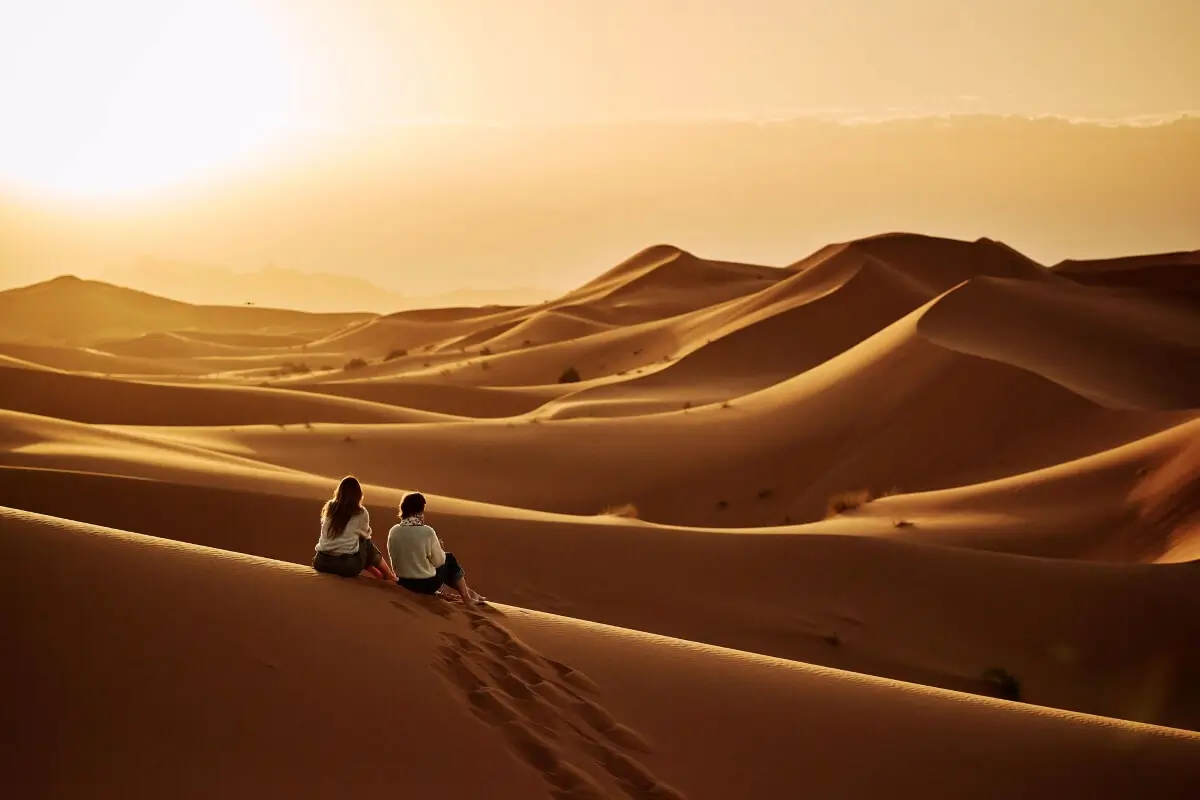
The alarm goes off at 4:30 AM, and for once in your life, you don’t hit snooze. Because today, you’re watching the sun rise over the tallest sand dunes in Morocco — and trust me, no mattress on earth is worth missing that.
Merzouga desert is one of those places that ruins you — in the best possible way. Once you’ve stood on the crest of an Erg Chebbi dune with the wind whispering Berber secrets in your ear and the Sahara stretching endlessly in every direction, every beach holiday you’ve ever taken suddenly feels a little… underwhelming.
Whether you’re a solo adventurer, a couple chasing magic golden hours, or a family ready for something wildly different — this guide covers everything you need to know to make your Merzouga trip unforgettable.
Where Exactly Is the Merzouga Desert — and How Do You Get There?
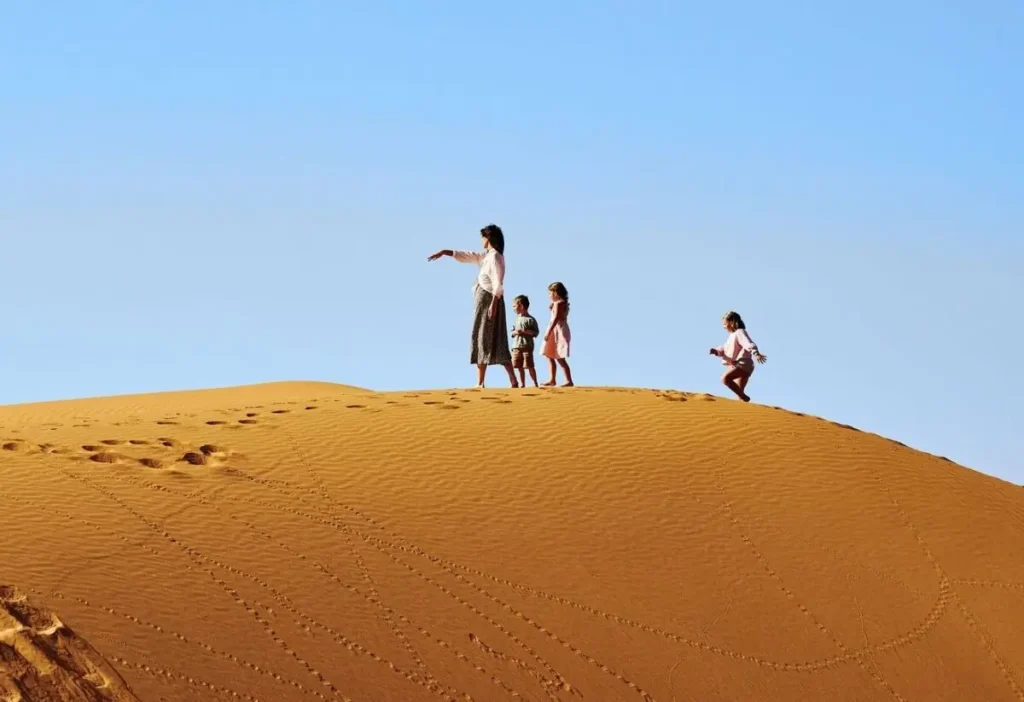
Merzouga is a small village in southeastern Morocco, sitting right at the feet of Erg Chebbi — a breathtaking sea of golden sand dunes that rise up to 150 meters high. It’s about 340 km from Marrakech and 570 km from Casablanca, making it a proper adventure to reach — but every single kilometer is worth it.
Your transport options:
- Shared CTM Bus from Marrakech (budget-friendly, ~10–12 hours)
- Private Transfer or Rental Car (most flexible, ~5–6 hours via the scenic Draa Valley route, we offer this option)
- Fly to Errachidia, then arrange a pickup — faster, but pricier
- Guided Tour from Marrakech — the most popular option for first-timers (and honestly, often the smartest)
Want us to take care of everything for you? Contact Us Now
“I took the mountain road through the High Atlas from Marrakech, and I genuinely forgot I was heading to a desert — the scenery was that dramatic. By the time the dunes appeared on the horizon, my jaw hit the dashboard.” — A guest with Sahara Services
If you’re planning a multi-day journey, check out our Merzouga desert tours from Marrakech for carefully crafted routes that handle all the logistics so you can just enjoy the ride.
The Erg Chebbi Dunes: Why This Desert Is Unlike Anything You’ve Seen
Let’s be honest — not all deserts are created equal. Some are flat, rocky, and, well, beige. Erg Chebbi? It’s cinematic. The dunes here have this warm, almost orange-red glow at golden hour that makes your phone camera absolutely redundant — no filter needed, no editing required.
The Best Time to Visit the Merzouga Desert
Timing is everything when it comes to desert travel. Here’s your season-at-a-glance:
| Season | Months | What to Expect | Ideal For |
|---|---|---|---|
| Spring | Mar–May | Warm days, cool nights, blooming oases | Most travelers |
| Summer | Jun–Aug | Scorching heat (45°C+) — extreme! | Hardcore adventurers only |
| Autumn | Sep–Nov | Beautiful temperatures, fewer crowds | Photography, trekking |
| Winter | Dec–Feb | Cold nights, possible snow on Atlas | Unique, magical experience |
Pro Tip 🌟: October and November are arguably the sweet spot — the light is softer, the heat is manageable, and you’ll share those dunes with far fewer tourists. Early spring (March) runs a very close second.
Top Things to Do in Merzouga Desert (Beyond Just “Looking at Sand”)
Yes, the dunes are gorgeous to stare at. But Merzouga has so much more going on — and if you leave without doing at least three of these, we’ll be genuinely disappointed on your behalf.
Camel Trekking at Sunrise (Non-Negotiable)
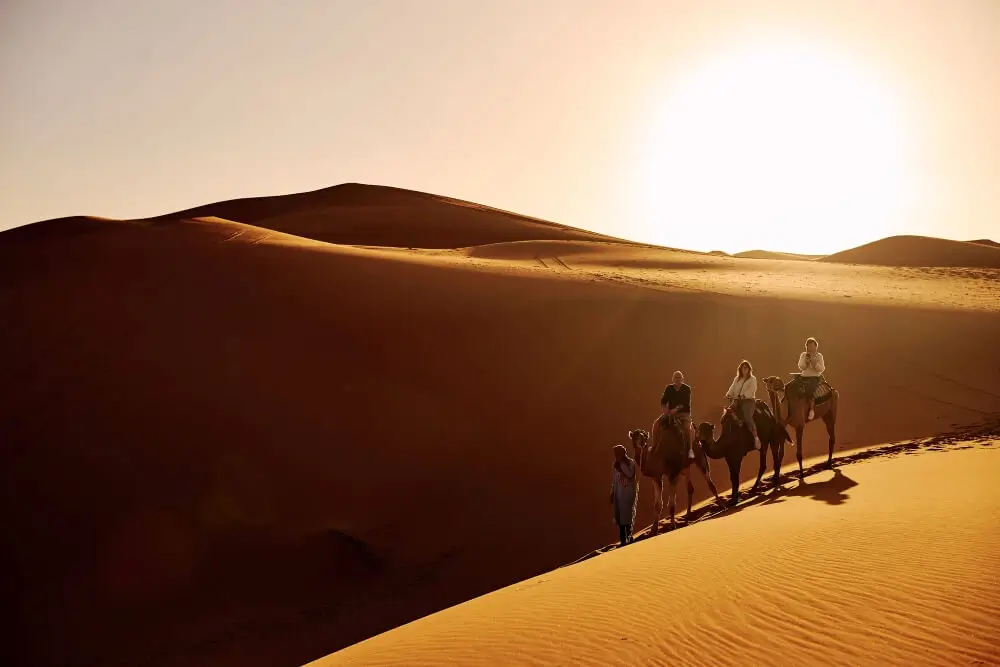
There is no more iconic Sahara experience than swaying atop a camel as the sky turns from deep violet to blazing gold. Most camps offer 1–2 hour treks at sunrise or sunset, and both are equally stunning in completely different ways.
Sunrise is quieter. Sunset is more dramatic. Book one of each if your schedule allows.
Sandboarding — For When You Want to Feel Like a Kid Again
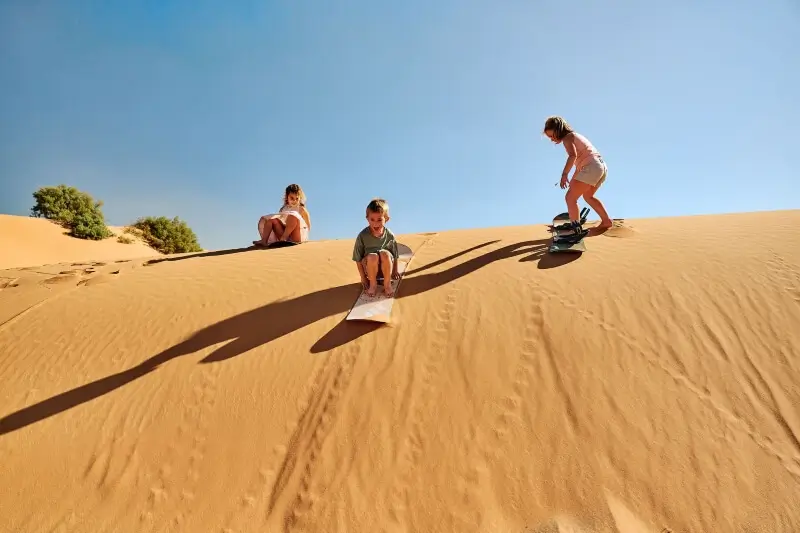
Rent a sandboard, hike up the nearest dune (yes, it’s a workout), and then slide down at genuinely terrifying speed. It’s free-spirited, slightly ridiculous, and completely addictive. You will eat sand. You will love every second of it.
Quad Biking and 4×4 Desert Excursions
For those who prefer engines over camels (no judgment), quad biking through the dunes and surrounding desert landscape is an absolute rush. Half-day and full-day 4×4 excursions can take you to hidden lakes, fossil sites, and nomadic villages that most tourists never see.
“We did a sunrise quad bike session, then spent the afternoon with a nomadic family over mint tea. By sunset, I had completely lost track of what day it was — and I didn’t care.” — Solo traveler, UK
Stargazing in the Sahara: The Sky That Rewrites Your Perspective
Here’s something the travel brochures undersell: the night sky over Merzouga is one of the most extraordinary things a human being can experience. With zero light pollution for hundreds of kilometers, you’ll see the Milky Way so clearly it looks painted on.
Bring a blanket. Lie flat on the sand. Look up. Say nothing for at least five minutes. Trust us on this one.
“I’ve been to observatories in three countries. Nothing — nothing — prepared me for that Sahara sky.” — A Sahara Services guest, Germany
Berber Culture: The Heart and Soul of Merzouga
The dunes get the Instagram fame, but the Berber people are Merzouga’s real treasure. Indigenous to North Africa for thousands of years, the Amazigh (Berber) communities around Merzouga are warm, generous, and fiercely proud of their culture.
Local etiquette tips you’ll actually use:
- Always greet with “Salam Alaykum” — it opens every door
- Accept mint tea if offered — refusing is considered rude (and honestly, why would you refuse?)
- Ask before photographing locals or their homes
- Learn two words of Tamazight (Berber language): “Azul” (hello) and “Tanmirt” (thank you) — you’ll make friends instantly
Check out our guide to Moroccan culture and travel etiquette before you go — it’s one of the best ways to travel more respectfully and connect more deeply.
Where to Stay in Merzouga: Luxury Desert Camps Worth Every Dirham
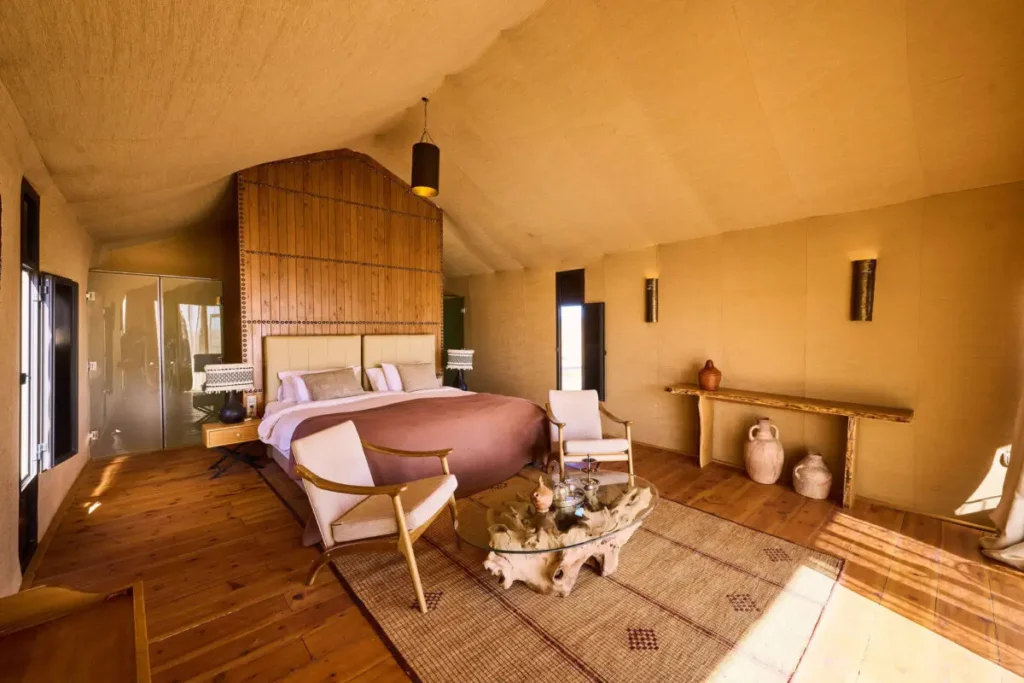
Forget everything you think you know about “camping.” Luxury desert camps in Merzouga are closer to boutique hotels — except with better views, better stars, and infinitely better stories.
The White Camel Acacia Camp — Where Elegance Meets the Sahara
The White Camel Acacia Camp is one of the most stunning desert retreats in Morocco — a collection of beautifully appointed Berber-style tents with private bathrooms, handwoven textiles, and sweeping dune views that’ll make you question whether you ever need a hotel room again.
The camp blends traditional Moroccan craftsmanship with genuine comfort — think plush bedding, lantern-lit evenings, live Gnawa music around the fire, and a kitchen that takes Moroccan cuisine very seriously.
Merzouga Luxury Desert Camps — Adventure with Five-Star Soul
Merzouga Luxury Desert Camps offers a full desert immersion experience — from guided sunset camel rides to stargazing sessions with a local astronomy guide. It’s the kind of place where you check in for one night and wake up three days later having completely lost track of the real world.
Both camps are managed by Sahara Services — Morocco’s leading desert travel specialists — and can be booked as part of a customized Morocco desert package that includes transport, guided excursions, and cultural experiences.
Local Secrets & Practical Tips Before You Go
Local Secrets Box The village of Khamlia, just 7 km from Merzouga, is home to a community of Gnawa musicians descended from sub-Saharan Africa. Their music is hypnotic, soulful, and completely undervisited. Stop in for tea and an impromptu concert — it’s one of the most authentic experiences in all of Morocco.
What to pack for the Merzouga desert:
- Lightweight long-sleeved shirts (sun + sand protection)
- A good headscarf or shemagh
- Quality sunscreen (SPF 50+)
- Electrolyte tablets — hydration is serious business
- Warm layer for the evenings (desert nights get genuinely cold)
- Cash in Moroccan Dirham (MAD) — ATMs are scarce out here
Approximate costs:
- Budget camp: 300–500 MAD/night
- Mid-range camp: 800–1,200 MAD/night
- Luxury camp: 1,500–3,000 MAD/night
- Camel trek: 150–300 MAD per person
- Quad bike (2 hours): 400–600 MAD
For solo female travelers: Merzouga is considered one of Morocco’s safest destinations. Camp environments are secure, locals are respectful, and the Sahara Services team is always on hand for support. Read more about solo travel safety in Morocco on our blog.
FAQ: Your Merzouga Desert Questions, Answered
How many days do I need in Merzouga? Two nights minimum — one to recover from travel, one to fully absorb the magic. Three nights is ideal if you want to explore beyond the dunes.
Is Merzouga desert safe for tourists? Absolutely. Morocco ranks among North Africa’s safest destinations for international travelers. Merzouga, in particular, is tourism-friendly and well-accustomed to hosting visitors from all over the world. Check Morocco’s official tourism safety guidance for the latest updates.
What should I pack for the desert? Layers, sun protection, sturdy closed-toe shoes for dune climbing, and a camera with a fully charged battery. Also: earplugs if you’re a light sleeper — desert silence is blissful, but camp music around the fire can go late.
Can I visit Merzouga on a budget? Yes — budget guesthouses and basic desert camps make it accessible. Plan around 300–500 MAD per night, and cook or eat locally to keep food costs low. The real luxury here is the landscape, and that’s completely free.
The Sahara Is Calling — Are You Ready to Answer?
Here’s the truth about Merzouga desert: no article, photo, or reel does it justice. You simply have to go. You have to feel the sand shift under your feet, smell the dry desert air at dawn, hear the silence that somehow feels loud, and watch that ridiculous, beautiful sun melt into the dunes.
And when you’re ready to make it happen — properly, comfortably, and unforgettably — the Sahara Services team is here.
👉 Explore our Merzouga desert tours and luxury camp packages — or simply reach out and let’s build your perfect Moroccan adventure together.
Sahara Services — Crafting Authentic Moroccan Desert Experiences Since 2005 📍 Merzouga, Morocco | 🌐 saharaservices.info